
FMS Transport Software
FMS PickHub
Order picking on Android, connected to your ERP
FMS PickHub sits between your ERP or WMS and the handhelds on your warehouse floor. Orders arrive in the order you walk the shelves, each order is picked by one person, every pick is checked as it happens, and the picked quantities go back to your system the moment the order is done.
Where PickHub fits
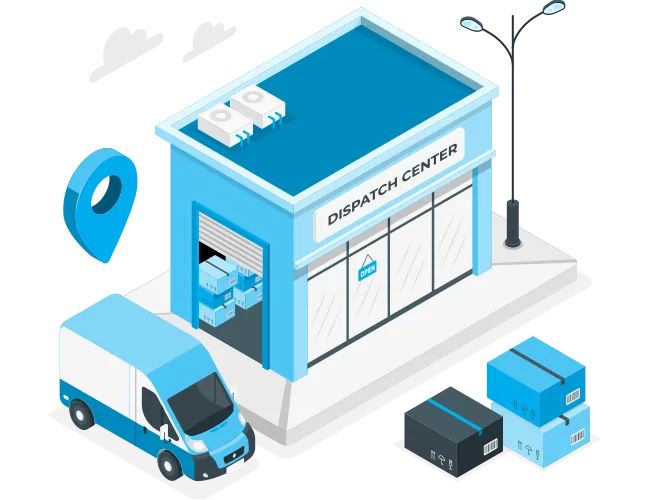
PickHub doesn’t replace your ERP or WMS. Your system still looks after stock, pricing and invoicing. PickHub looks after the part on the floor: getting each order to the right person, guiding them shelf by shelf, checking every pick, and sending the result back so nobody keys it in again.
How it works
From your system to the warehouse floor, and back again.
-
Orders arrive
Your ERP, WMS or Shopify sends orders to our API, or we collect them from a file, a folder or your system’s API.
-
Most urgent first
The handheld lists what is ready to pick, urgent orders and the next truck’s orders first.
-
One picker per order
Opening an order takes it off everyone else’s list, so two people never pick the same order.
-
Pick in walking order
Lines appear in bin-location order. Every scan or count is checked against the order as it happens.
-
Back to your system
When the order is done, the picked quantities go back to your system, with the reason for any shortage.
Built for how warehouses really work
Pick in walking order
Lines are sorted by bin location, from your system or from a location list PickHub keeps for you, even for Shopify stores. Pickers can re-sort by product at any time.
Waves and priorities
Urgent orders first, then by dispatch time. Or work one wave at a time, such as everything for the 2 pm truck.
Every pick checked
A wrong product or one too many is refused on the spot, with its own sound, before it reaches the carton.
Scan, count or both
Scan every item, type in the quantities, or both. Barcodes are optional, so it suits manufacturers who don’t use them.
Cartons count as cartons
Scan a carton and the whole pack is counted, or have orders arrive in cartons. You choose how your warehouse works.
Shortages with a reason
Out of stock, damaged or can’t find it: the picker taps the reason, and it goes back to your system with the order.
Batch and expiry recorded
Where products carry GS1 barcodes, the batch and expiry date picked are recorded with each scan.
Someone else can take over
If a picker is called away, a supervisor releases the order with a note and the next picker carries on where they left off.
Keeps going in dead spots
Scans made where the Wi-Fi drops out are kept on the device and sent when it reconnects, counted once.
On the floor
The devices you already have
Android handhelds and tablets with built-in scanners, such as Zebra, Honeywell and Datalogic, on Android 8 or later.
Or the camera
No scanner? The device camera reads the barcode instead.
Sign in by PIN or badge
Each picker signs in, so every order shows who picked it and when.
A portal for supervisors
From a browser, see what is waiting and what is being picked, follow a wave, release an order someone can’t finish, and see productivity, turnaround and short-pick reports.
Connected to your system
Your system can send orders to our API as they are created, or we collect them on a schedule from your system’s API, an FTP site or a folder. Results go back the same way. Each connection is set up by our team around your data as it really is, so nothing is re-keyed. We have connected SAP, Pronto and many other systems, and we work from your own data, not a template. More on integration →
Your server or ours
FMS PickHub runs on your own server, inside your network, or we host it for you. Either way your data sits in its own database, separate from every other business.
Next: straight into despatch
For DispatchHub users, the next step is picked orders flowing straight into despatch, with the carrier label printed on the floor from a belt printer. About DispatchHub →
Tell us how your warehouse picks today
Tell us which ERP or WMS you run, how many pickers you have and whether you scan, and we will show you how FMS PickHub fits.